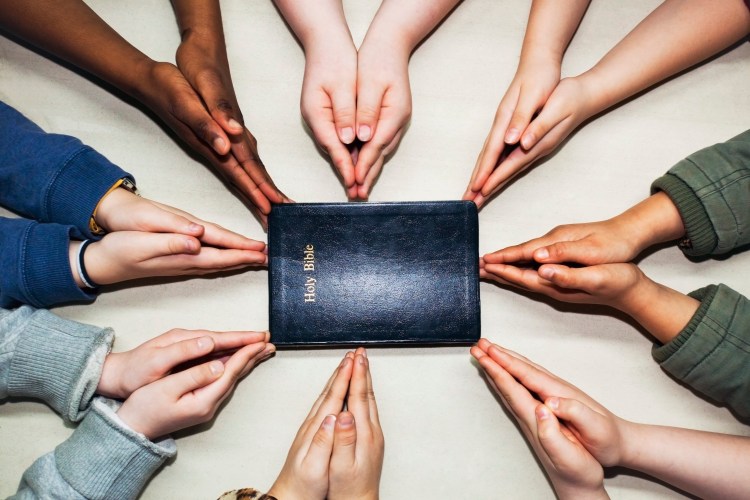
Image Source: WordPress Image Library
Religious Education in the Victorian Catholic Schools Curriculum
The Victorian Curriculum and Assessment Authority (2015) define the school curriculum as the statement of the purpose of schooling. It defines what it is that all students have the opportunity to learn as a result of their schooling, set out as a series of learning progressions (MACS, 2023).
The Victorian curriculum for Foundation to Year 10 is the common set of knowledge and skills that are required by all students for lifelong learning, social development, and active and informed citizenship, also incorporating the Australian Curriculum which reflects Victorian priorities and standards (MACS, 2023).
Curriculum in a Catholic school is illuminated by Catholic faith with the formation of, and reverence for the learner at its centre. Learning experiences are designed to help learners develop their knowledge, skills and understandings in all learning areas. It is within this context that all learners are entitled to access a quality curriculum where they have a feeling of connectedness and belonging, of being known and valued, and listened to (MACS, 2023).
Catholic schools in Victoria are required to develop a learning and teaching program based on the Victorian Curriculum but each school will develop curriculum structures and programs that evolve out of its own context and needs. Catholic schools also have Religious Education at the core of their curriculum (MACS, 2023).
Planning Prayer Rituals for the Victorian Year-7 Classroom

As part of the Year 7 Religion Curriculum Melbourne Catholic Education (2023) defines that:
- Year Level 7 students will be able to explain Catholic tradition.
- As part of the curriculum students will learn about Jesus, the church and community, God religion and life, prayer, liturgy and sacrament along with morality and justice.
- Students will be able to display their understanding by comparing and contrasting with at least two other Students in their class through dialogue within the Catholic Tradition and the cultural context by making sense of how religious beliefs illuminate.
- Students will be able to reflect on experiences that through spiritual and religious insights by demonstrating openness, beauty, and mystery.
- Students will integrate new insights by highlighting the complexity of significant issues.
- Through Year-7 students will explore prayer, celebrate the eucharist, take a closer look at the eucharist, develop greater understanding of the liturgical year, develop a greater understanding of advent, lent and Easter prayers (RESource, 2023).
A guide is provided to plan prayer rituals for Year-7 students including planning, structures, and processes. Download the guide below:
Teaching Other useful resources for planning prayer rituals
Two useful resources that may assist with planning are available for teachers.
Teacher Dialogue Tool – useful to help with prompts to open conversations about prayer, RE and to encourage dialogue when questions from students are useful to support the whole class learning more about the topic in question.
Teaching Prayer in the Victorian Year-7 Classroom

An approved method (MACS, 2023) defines how to teach student Prayer including:
- Encourage students to respect prayer time.
- Begin all classes with the Acknowledgement of Country
- Endeavour students’ heart, body and soul is present to begin prayer time
- Turn it into a ritual – Pray every day with the students.
- Provide a Catholic sacred space
- Encourage students to ‘dress’ the Sacred Space for prayer.
- Provide stimulation for prayer time and encourage students to consider meditative, contemplative and vocal prayer methods.
- Establish a familiar expectation and pattern of prayer.
- Ensure scripture is central to prayer.
- Include formal prayers of the Catholic church (Our Father, The Hail Mary and The Glory Be)
- Use inclusive language during prayer (do not always refer to God as he/him)
- Begin and conclude prayer with the Sign of the Cross
The video here explains in detail the 10 Prayers every catholic child should know and these can be used in the Year-7 classroom:
Two learning activities are also provided to support graduate teachers:
Learning Activity 1: Who was Saint Mary Mackillop?
Students should watch the video: Who was Saint Mary MacKillop? and complete the worksheet attached.
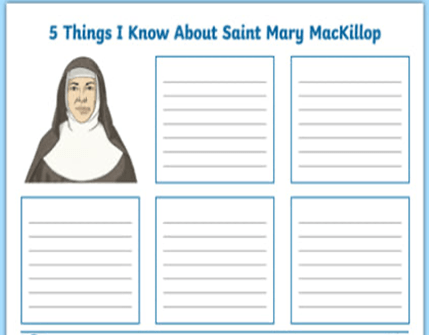
Download the worksheet here
Learning Activity 2: Who was Saint Joseph?
Students should watch the video: Who was Saint Joseph? and complete the worksheet attached.
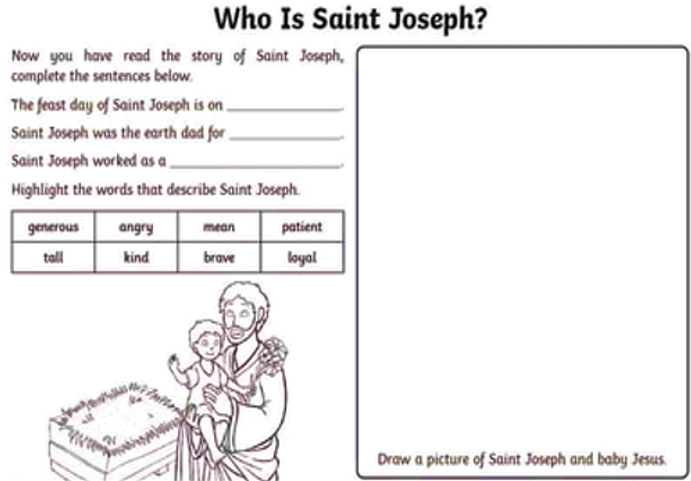
Download the worksheet here
Guided Prayer and Meditation for Year-7
A video presented by Catholic Kids media is often used in Year-7 to introduce guided prayer and meditation. Click here to view the video:
The Poster provided is a common and useful visual aid to display in the Year-7 classroom as a reminder to start and end each day with prayer. Download the poster here:
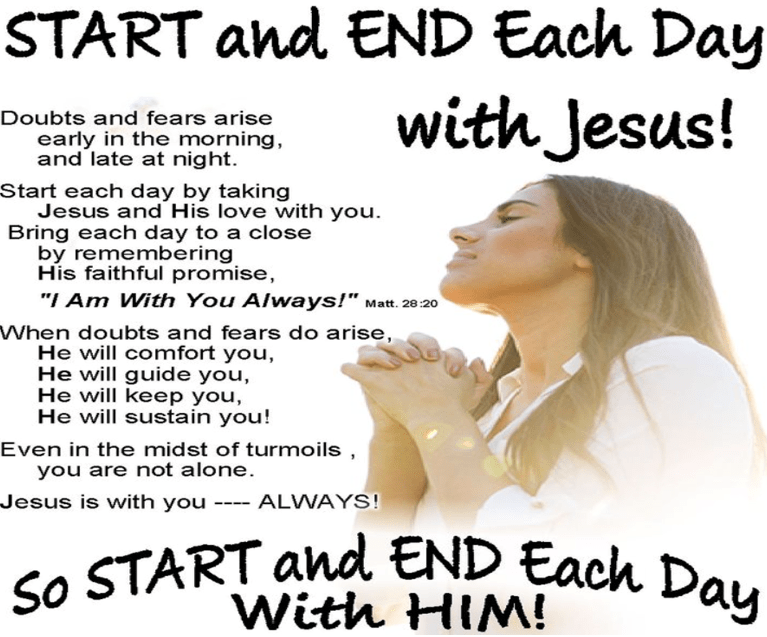
Poster: Start and End with Prayer, MACS, 2023.
Is Learning Prayer via Digital learning viable?

Digital Learning brings with it a whole new set of behaviours, both by the learner engaging in the content, and the teacher using online methods to deliver and teach it.
In navigating the intricacies of the world wide web, both students and teachers presence and participation is challenged by engaging in content and the topic itself.
For teachers and their students, online participation in topics around studies in religion and life may be challenging for both the teacher and the student cohort.
Why? This mode of engaging in learning is more than about knowing about the holy bible, prayer being a good catholic. It’s about taking a journey to learn more about prayer and morality.
A learning journey that entices Year 7 students to be curious and inviting them to learn via a digital method so they can develop meaningful takeaways about Prayer and Morality.
The home of Potts – a website by Stephen Potter Curtin ID: 20369875 OUAID:1119967
 The Home of Pottz by Stephen Potter